

No work all play makes Jack a sad boy
Redundancy is particularly hard if your job is part of your identity

Chris Shaw pretty much made himself ‘redundant’.
Within weeks, he was grieving, lonely and lost. Within months, he was standing on a balcony in southern Spain, wondering if it was high enough.
“I just had this horrible, useless feeling of not being capable of doing anything,” he tells me over a beer one evening in a weird countryside venue that feels a bit like the Hotel California or San Junipero.
Chris learned the strange truth about work and play the hard way. That without work, play feels meaningless. That without a job, you don’t really ever have a holiday. That the sofa is never enough.
“I was grieving for a job that I’d really enjoyed doing,” Chris recalls. “I loved the company and what we’d built. And I had a really good time.”
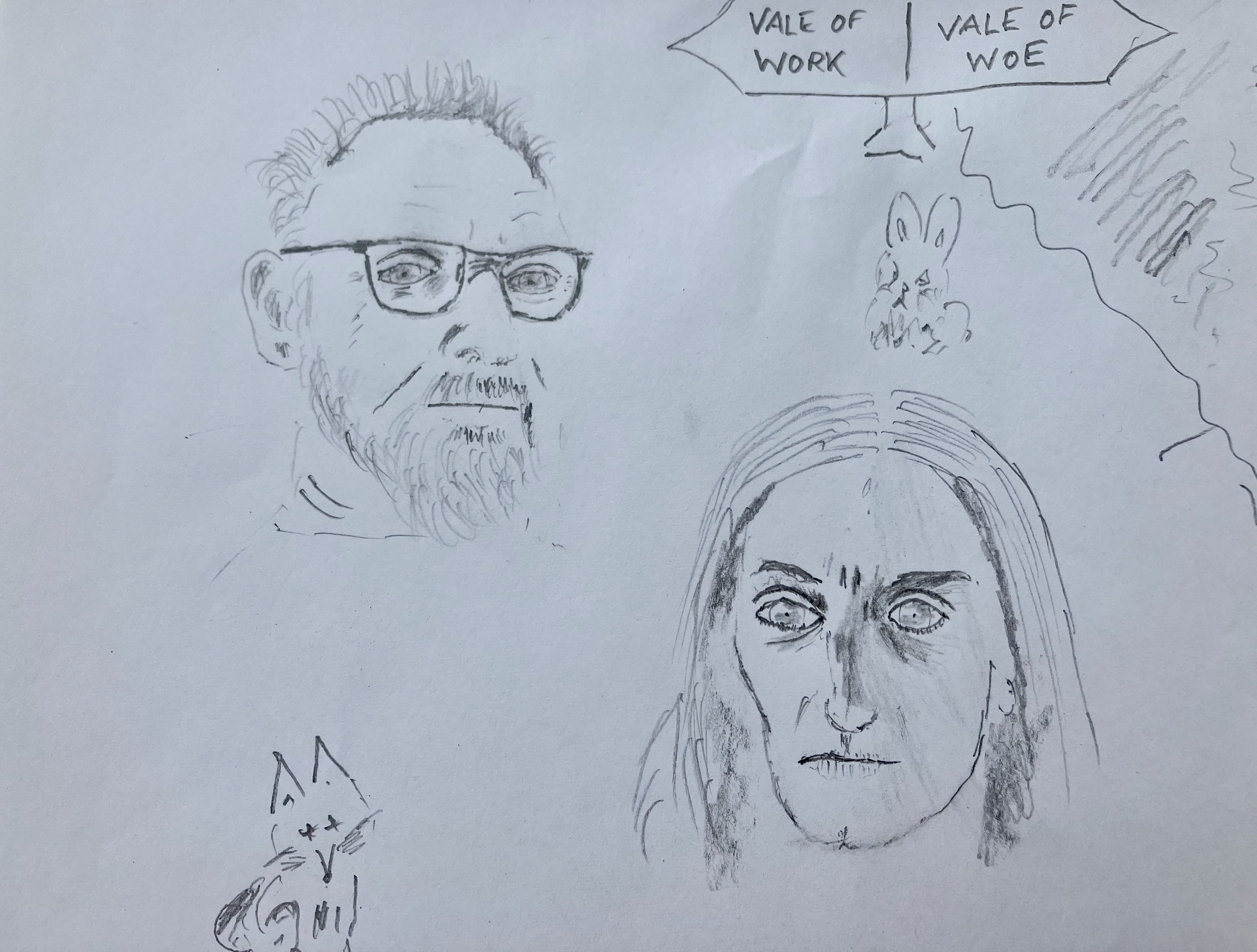
Chris was a kind of operations everyman for a small events company, and over 20 years he’d pretty much done it all, from running conferences to managing a studio, and devising the restoration of an entire building. “I was Mr Fixit, sticking everything together and making it work.”
But by the summer of 2023, he reckoned there was nowhere else for him to go. His role was becoming a bit thinner, so he suggested to his bosses that they let him go.
They agreed.
“I’d changed career multiple times in my life and I just thought I’d do so again.”
But for weeks nothing much happened. Chris began to have this creeping suspicion that he might not have done the right thing. He realised that work had given him a lot more than just a pay check. Friendships, meaning, validation. “I realised that it was purpose that I got from the company. I had a purpose - people relied on what I did.”

A few sessions with a life coach didn’t help. Chris had an idea of wanting to work creatively with his hands - he’s an incredibly able person and could build you a sauna or a new kitchen extension if you ask nicely. But all he landed were a few painting jobs.
Things came to a head during a big group holiday in Spain, with wife, children, and other families - 23 people in all. And everyone having a blast. Except Chris.
“We were on this fourth-floor balcony and I’m thinking I could just jump off here,” he recalls. “We went on the ferry to Tangiers, and I was standing on the back and thinking I could just jump off. I was thinking like this all through this holiday. It was really frightening.”
“And I though that would be a really shit thing to do to everyone, and that’s what stopped me.”
When he got home, he confided in his wife. They sought help. A short course of antidepressants. A lot of meditation. Some work landscaping a neighbour’s garden. And then the thing that really helped him turn things around - a gig in a boatyard, reviving one of the vessels that was there in Dunkirk in 1940, helping with the evacuation of allied troops.

“It made me think I can do anything,” he says. He knows he is not out of the woods yet, that his happiness really depends on his busyness. Maybe he’ll set up a company to do restorations and refurbishments. Chris likes having problems to solve.
“I don’t think I will ever retire. I think I will always work. I’m a grafter, but I do want to do the things I like.”
Several of the people I have interviewed for this series about redundancy are, like Chris, born grafters, only really happy when they are stuck deep into fulfilling, absorbing work.
Leila A1 describes herself as “raised to work”, having had some form of job since she was a teenager - paper round, babysitting, a factory, a cloakroom at university. Work was a family leitmotif. “They were hardworking people,” she says of her forebears. “There was no such idea as leisure.”
So it was a shock when she was made redundant from a big finance firm a couple of years ago. She saw it coming a year in advance: a clash with a manager, subjective allegations that were impossible to defend, a ‘performance plan’…
Even though she knew she was a square peg in a round hole, even though she found financial services to be a ‘poisonous’ environment ill suited to her, it was still a very nasty experience to be elbowed out.
“There are a number of thing you go through when you have to leave a job,” she says, with a touch of understatement. “It’s like grieving. You have days when it hits you in the most random places - a sense of rejection and worthlessness. It can be very intense.”
Martin B also found it deeply unsettling. “I’d never been unemployed - I’ve been PAYE since I was 21. Suddenly you are cast into this world, and you have no idea what’s next.”
Like Leila, Martin endured an acrimonious departure from his company, which injected all kinds of conflicting emotions into redundancy: relief, anger, hopelessness, self-disgust, despair.
“These thoughts popped up in my lowest moments - there is no way out you’ve let everyone down, you’ve fucked things up for your family; why are you bothering any more?”
“I still have these down moments if I’m not working, I have this conversation on repeat.”
I too have found worklessness to be a strangely flat, bereft land where it is sometimes hard to feel like you are a worthy human being. We value work so highly, define ourselves by its status and value, build our identity around its self-importance, that when it isn’t there we can feel aimless and unwanted.
What is to be done about this? Why do we fetishise work so much, and scorn its empty, shapeless converse. How best to deal with redundancy, joblessness, the end of work?
I’ve been talking to a few experts about this. I’ll be back with what they said very soon.
This week I have been…
… clipping video segments from a terrific gig in Chiswick on International Jazz day. Here is a quick excerpt from that Duke Ellington favourite, Caravan.
… enjoying the latest article scoffing at the use of AI by writers.
… concerned about the latest nonsense about antidepressants emerging from the US health secretary.

Braindrops - weekly brain-teasers to test the mind (#45)
More linkages this week. Four clues, four answers, but what links them together?
Newspaper founded in 1986 (11)
Colour found in filigree nugget (5)
What Oasis did in 2025 (6)
Most reliable card (anagram) (7, 9)
Last week, we had a look at some words that mean two totally contrary things, even without changing a letter. Here are the answers:
O _ _ _ _ _ _ _ _ (9) Failing to notice OVERSIGHT
O _ _ _ _ _ _ _ _ (9) Responsibility for noticing OVERSIGHT
S _ _ _ _ _ _ _ (8) Permit SANCTION
S _ _ _ _ _ _ _ (8) Forbid SANCTION
C _ _ _ _ _ (6) Split apart CLEAVE
C _ _ _ _ _ (6) Cling to CLEAVE
And a final cheeky one:
T _ _ _ _ (5) Winner TRUMP
T _ _ _ _ (5) Loser TRUMP
Until next time
Mark
A pseudonym, for legal reasons